

The Verdala story: from fortress to school
Discover the remarkable journey of our school, a place where history and education intertwine. Explore the rich past that shaped our school, from ancient fortifications to a vibrant learning environment.
The Verdala Story
From Fortress to School
St Margaret College Secondary School, Verdala, stands on one of Malta’s most remarkable historic sites. Long before students filled its classrooms and corridors, this land formed part of an important system of fortifications that witnessed the Knights of St John, the French occupation, British rule and both World Wars.
Today, Verdala continues its story as a place of education—preserving its extraordinary past while inspiring future generations.
A Story Written in Stone
Verdala’s history can be traced back to the time of the Great Siege of 1565, when the hill served as a strategic vantage point overlooking the Grand Harbour.
On 30 December 1638, Grand Master Jean Paul Lascaris laid the first stone of the Firenzuola Lines. These fortifications later became known as the Santa Margherita Lines. Verdala Gate, situated opposite the present school entrance, is the oldest surviving part of these walls.
Construction continued for almost a century:
-
1638: The first stone of the Firenzuola Lines was laid.
-
1670: Work began on the Cottonera Lines under Grand Master Nicolas Cotoner.
-
1697: Grand Master Perellos continued work on the Margherita Lines.
-
1720: Grand Master Zondadari continued the project.
-
1736: The Margherita Lines were finally completed under Grand Master Vilhena.
Did you know?
It took approximately 98 years to complete the Margherita Lines.
The French Period
In June 1798, Napoleon Bonaparte arrived in Malta with a large fleet. Grand Master Ferdinand von Hompesch surrendered shortly afterwards.
The Maltese revolted against the French in September 1798. During the following blockade, French forces positioned guns along the Cottonera Lines, close to the area below the school’s present football field.
The French occupation ended when they surrendered in September 1800.
The Victorian Fortress of Verdala
Following the Treaty of Paris in 1814, Malta officially became part of the British Empire.
In 1853, the British constructed Verdala Barracks behind the old Verdala Gate. They also built a new gate leading towards Cospicua, decorated with the Royal Coat of Arms.
Construction of Fort Verdala began in 1854. The fortress is believed to have been designed by Major General Sir George Judd Harding. The work was carried out by members of the Royal Sappers and Miners and continued until approximately 1860.
Two sets of high walls were built between Verdala Barracks and St Clement’s Bastion. The land between them was levelled to make space for new military buildings.
The fortifications included:
-
384 rifle slits
-
Casemates for cannons
-
Underground tunnels
-
Gunpowder and ammunition stores
-
Large emergency water tanks
Verdala eventually became one of the principal powder stores for Britain’s Mediterranean Fleet. The main water tank beneath the present school playground is believed to hold more than one million gallons of water. It was designed to flood the ammunition stores in the event of a fire.
Regiments at Verdala
Several British regiments were stationed at Verdala between the late nineteenth and early twentieth centuries. Their presence can still be traced through military badges carved into parts of the buildings.
These regiments included:
-
2nd Battalion North Staffordshire
-
1st Battalion South Staffordshire
-
1st Battalion Bedfordshire Signallers
-
2nd Battalion Connaught Rangers
-
Duke of Wellington’s Regiment
Verdala During World War I
During World War I, Verdala Barracks became a prisoner-of-war camp. German, Austrian, Egyptian and Turkish prisoners were held in Malta, with a number of important German naval officers imprisoned at Verdala.
Among the most notable prisoners were:
-
Karl Dönitz, who later became Commander-in-Chief of the German Navy
-
Captain Karl Friedrich Max von Müller, captain of the German warship SMS Emden
-
Prince Franz Josef von Hohenzollern
Security at the camp was initially quite flexible. However, it became much stricter after two prisoners escaped and British authorities discovered that naval movements in the Grand Harbour were being recorded and communicated outside the camp.
The windows overlooking the harbour were consequently barred and covered.
In 1920, Verdala also became home to a number of White Russian officers who had opposed the Bolsheviks during the Russian Civil War.
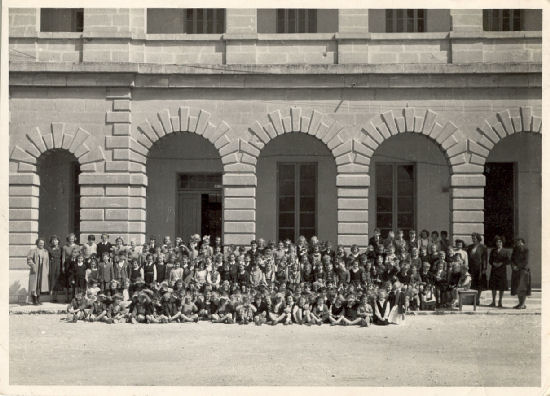
Verdala Infants 1952

Thought to be the St Clement’s Choral Society Meeting in the Club Room or Gym – photograph by Hiesinger

An Overview of St Clement’s Camp looking from Verdala
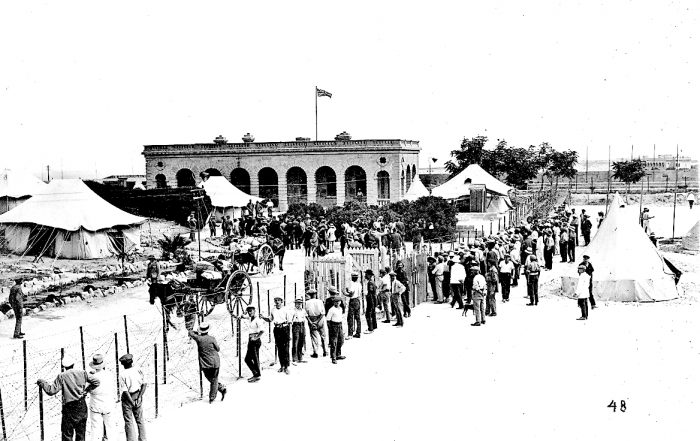
The Access Way into St Clement’s – photograph attributed to Hiesinger
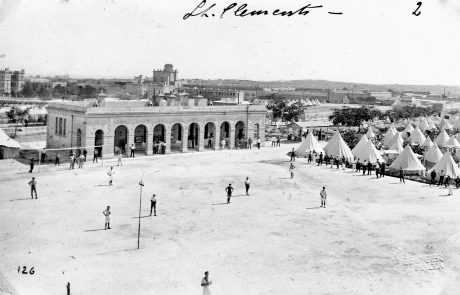
St Clement’s Football Match – photograph by Hiesinger
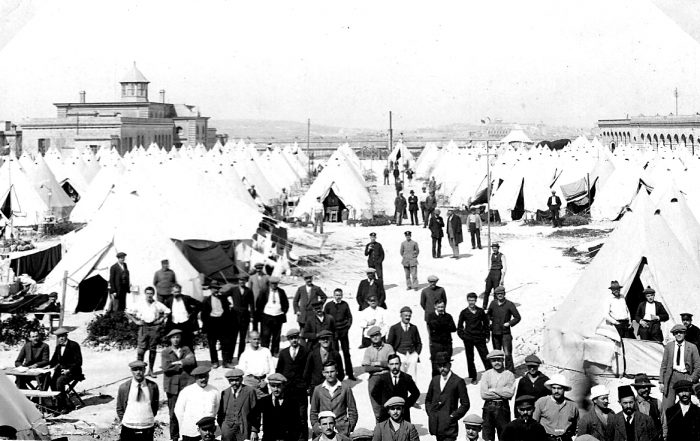
A View of Man Tents looking towards the Verdala – photograph by Kofler

A Formal Roll Call with Officers Inspecting

27 January 1917 – St Clement’s Parade Ground with Brass Band and Drums

Tents

27 January 1917 St. Clement’s – Kaiser’s Birthday Gymnastics Display Team Line-up
World War II at Verdala
Verdala once again served a military purpose during World War II.
Between 1940 and 1945, the site was used for several purposes:
-
It was known as HMS Euroclydon
-
It housed submarine crews
-
It served as a transit camp
-
It operated as a prisoner-of-war camp
-
It became a Naval Detention Centre
-
It later served as a demobilisation centre for servicemen returning to the United Kingdom
From Military Stronghold to School
Verdala’s gradual transformation into an educational site began during the twentieth century.
A state primary school opened in the area during the 1920s. Dockyard classes were also established to prepare students for work in Malta’s naval dockyard.
After World War II, Verdala School reopened in April 1949. In 1952, it became known as the Royal Naval School, serving the children of British service personnel stationed in Malta.
The school’s population grew significantly during the following decades. However, political changes and the withdrawal of British service families led to the Royal Naval School’s final closure in July 1977.
The International School of Malta
During the 1970s, the site became home to the International School of Malta. It originally catered for children whose parents worked overseas in the oil exploration industry.
The school later reopened under the name The Verdala School of Malta and eventually began accepting Maltese students. It became known as Verdala International School before moving to St Andrews.
Verdala as a State School
A new educational chapter began in September 1984 when Verdala Boys’ Secondary School opened for students whose parents had chosen a government education.
Mr Charles Chetcuti served as Head of School.
In September 1985, the Verdala Junior Lyceum opened for students who had successfully completed the national examinations at the end of primary school. It later became known as the Ġużeppi Despott Boys’ Junior Lyceum, named after the Maltese naturalist and ornithologist Ġużeppi Despott.
A new block was constructed behind Block F to provide additional spaces for lectures and the teaching of Information Technology.
Verdala Today
The transformation of Verdala from a military installation into a place of education is now complete.
Its bastions, tunnels, walls and gateways continue to remind us of the site’s extraordinary history. At the same time, its classrooms, laboratories, workshops and recreational spaces represent its continuing commitment to learning.
St Margaret College Secondary School, Verdala, is therefore much more than a school. It is a place where Malta’s past and future meet—a historic setting in which new generations continue to learn, grow and create their own stories.
Key Dates
1638 — First stone of the Firenzuola Lines laid
1670 — Construction of the Cottonera Lines began
1736 — Margherita Lines completed
1798 — French occupation of Malta
1853 — Verdala Barracks constructed
1854 — Construction of Fort Verdala began
1914–1918 — Verdala used as a prisoner-of-war camp
1920 — White Russian officers housed at Verdala
1940–1945 — Verdala used for several wartime purposes
1949 — Verdala School reopened
1952 — Became the Royal Naval School
1977 — Royal Naval School closed
1984 — Verdala Boys’ Secondary School opened
1985 — Verdala Junior Lyceum opened
Historical information adapted for the school website from material provided by Ms R. Debattista, retired Head of Department for Geography, and research by Mr Martin Azzopardi sdc, school archivist.